4.7
4.7



 History
  Schedule


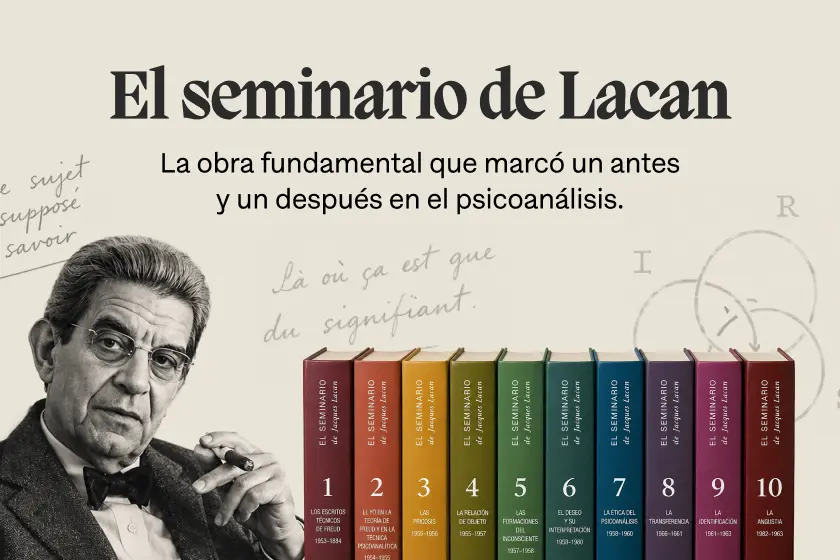
El seminario de Lacan
A Work Without Equal in Twentieth-Century Thought
Between 1953 and 1980, Jacques Lacan delivered twenty-seven seminars that, taken together, constitute the most ambitious and influential theoretical and clinical corpus in psychoanalysis after Freud. A Parisian physician, psychiatrist and psychoanalyst, Lacan did not simply continue Freud's work: he relaunched it from within, confronting it with the structural linguistics of Saussure and Jakobson, the philosophy of Hegel and Heidegger, mathematical logic and topology, and the literature of Joyce and Shakespeare. The result is a teaching that remains, decades later, an intellectual challenge of the first order.
The Seminars are not systematic treatises. They are transcriptions of oral classes: living thought in motion, presented before an audience and traversed by the questions of the moment. This makes them both difficult and fascinating: in them, theory is constructed in real time, corrected, contradicted and surpassed. To read them is to enter the workshop of an extraordinary thinker.
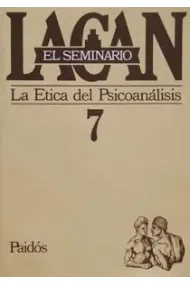
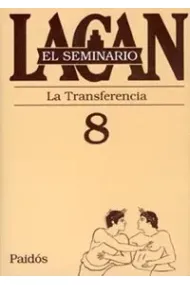
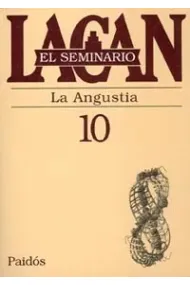
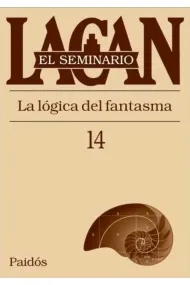
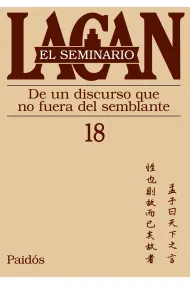
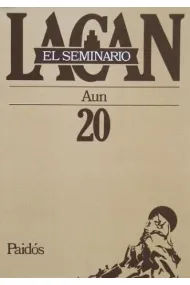
The collection published by Ediciones Paidós, established under the direction of Jacques-Alain Miller, is the reference edition in Spanish. It includes the volumes published to date and continues to incorporate seminars that had remained unpublished. Each volume includes a presentation of the establishment of the text and notes that guide the reading.
Three Moments, One Teaching
Tradition distinguishes three major periods in the Seminars:
The return to Freud (Seminars 1-10, 1953-1963). Lacan rereads Freud through structuralism and philosophy, and builds his conceptual architecture: the three registers (Real, Symbolic, Imaginary), object a, foreclosure. This is the most accessible period for those beginning to read him.
The properly Lacanian teaching (Seminars 11-21, 1964-1974). After his break with the IPA, Lacan founds his own School and develops his most original concepts: the four discourses, the formulas of sexuation, the theory of jouissance. Seminar 11 is the best entry point for the non-specialist reader.
The late teaching (Seminars 22-27, 1974-1980). Dominated by the topology of the Borromean knot, this is the most demanding and also the freest period: Lacan thinks clinical practice through Joyce, knots and equivocation. Seminar 23, The Sinthome, is his late masterpiece.
Why Read Lacan Today?
Lacan's work does not belong to a past era. His questions -what the subject desires, what divides it, how the body speaks, what language does to us- are more urgent than ever in an age dominated by algorithms, the acceleration of discourse and the crisis of social bonds. The Seminars do not offer reassuring answers: they offer instruments for thought.
His influence extends far beyond psychoanalysis: Slavoj Zizek, Judith Butler, Alain Badiou, Joan Copjec, Fredric Jameson -among many others- have built part of their work in dialogue with Lacan. To read him is to enter one of the liveliest philosophical and clinical debates in contemporary thought.




 New
New 
Looking for a guaranteed hit?
Write to us: personalized recommendations from our booksellers are waiting for you. 💘 🤓
Talk to a bookseller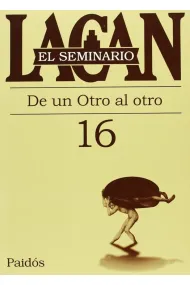 New
New 


Talk to your bookseller
Do you need help finding a book?
Do you want a personal recommendation?