4.7
4.7



 Història
  Agenda


 Inici
Inici 


Detalls del llibre
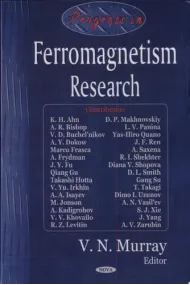
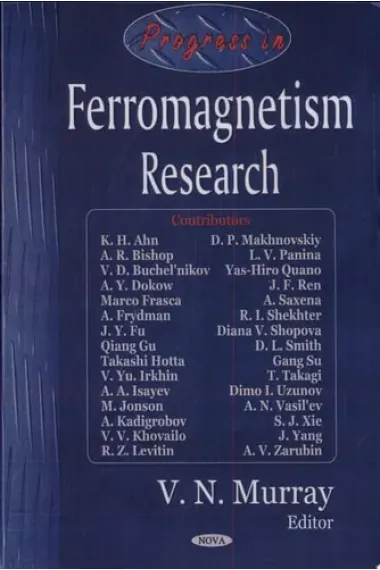
Ferromagnetism is a form of magnetism that can be acquired in an external magnetic field and usually retained in its absence, so that ferromagnetic materials are used to make permanent magnets. A ferromagnetic material may therefore be said to have a high magnetic permeability and susceptibility (which depends upon temperature). Examples are iron, cobalt, nickel, and their alloys. Ultimately, ferromagnetism is caused by spinning electrons in the atoms of the material, which act as tiny weak magnets. They align parallel to each other within small regions of the material to form domains, or areas of stronger magnetism. In an unmagnetised material, the domains are aligned at random so there is no overall magnetic effect. If a magnetic field is applied to that material, the domains align to point in the same direction, producing a strong overall magnetic effect. Permanent magnetism arises if the domains remain aligned after the external field is removed. Ferromagnetic materials exhibit hysteresis. In 2004, it was discovered that a certain allotrope of carbon, nanofoam , exhibited ferromagnetism. The effect dissipates after a few hours at room temperature, but lasts longer at cold temperatures. The material is also a semiconductor. It is thought that other similarly formed materials, of boron and nitrogen, may also be ferromagnetic. This new book rings together leading research from throughout the world.
Llegir més - ISBN13 9781594543357
- ISBN10 1594543356
- Pàgines 356
- Any Edició 2026
- Fecha de publicación 05/05/2026
- Idioma Alemany, Francès
Ressenyes i valoracions
Sigues la primera persona a valorar-lo!
Has llegit Progress in Ferromagnetism Research?


 Novetat
 Progress in Ferromagnetism Research (Alemany, Francès)
- De
- |
- Nova Science Publishers, Incorporated (2026)
- 9781594543357
285,28€
300,30€
-5%
Enviament Gratuït
No disponible
285,28€
300,30€
-5%
Enviament Gratuït
No disponible


Devolució gratuïta

 Gràcies per comprar a llibreries reals!
 Whatsapp
 Facebook
 Linkedin
 X
X