4.7
4.7



 Història
  Agenda


 Inici
Inici 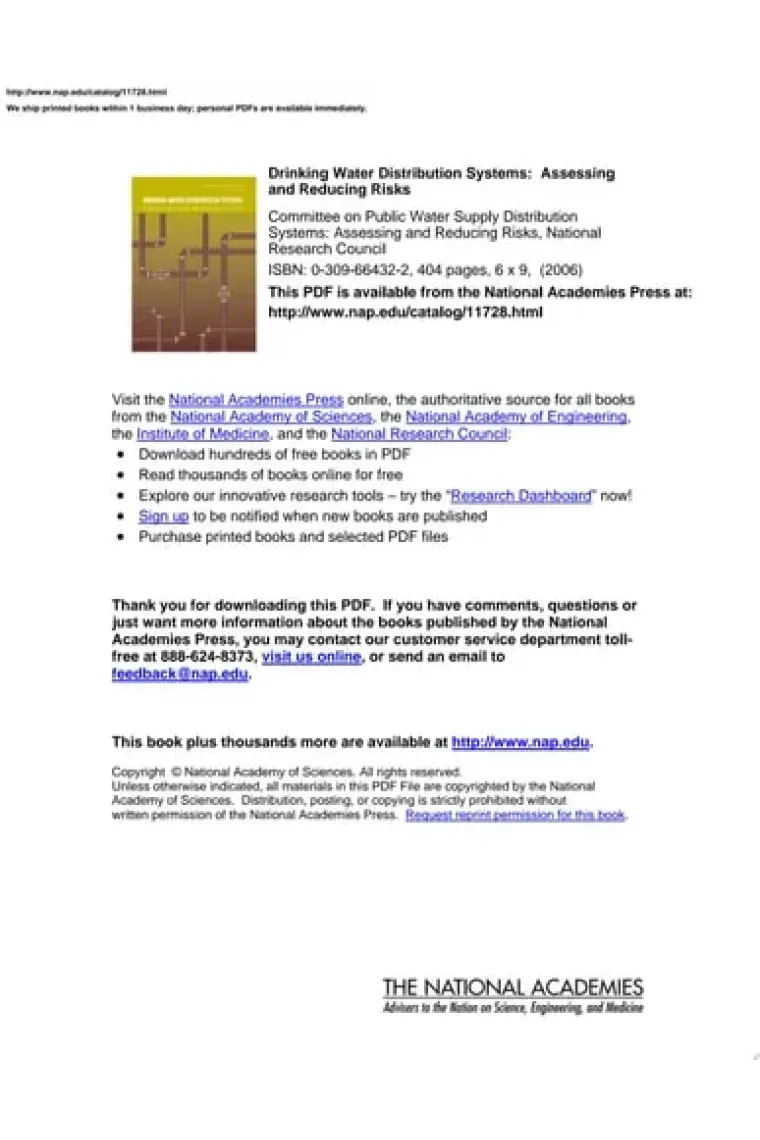


Detalls del llibre
Protecting and maintaining water distributions systems is crucial to ensuring high quality drinking water. Distribution systems-consisting of pipes, pumps, valves, storage tanks, reservoirs, meters, fittings, and other hydraulic appurtenances-carry drinking water from a centralized treatment plant or well supplies to consumers' taps. Spanning almost 1 million miles in the United States, distribution systems represent the vast majority of physical infrastructure for water supplies, and thus constitute the primary management challenge from both an operational and public health standpoint. Recent data on waterborne disease outbreaks suggest that distribution systems remain a source of contamination that has yet to be fully addressed. This report evaluates approaches for risk characterization and recent data, and it identifies a variety of strategies that could be considered to reduce the risks posed by water-quality deteriorating events in distribution systems. Particular attention is given to backflow events via cross connections, the potential for contamination of the distribution system during construction and repair activities, maintenance of storage facilities, and the role of premise plumbing in public health risk. The report also identifies advances in detection, monitoring and modeling, analytical methods, and research and development opportunities that will enable the water supply industry to further reduce risks associated with drinking water distribution systems.
- Autors Alan (National Research Of Council Of Canada) Robertson, Division On Earth And Life Studies, Water Science And Technology Board, Committee On Public Water Supply Distribution Systems: Assessing And Reducing Risks
- ISBN13 9780309103060
- ISBN10 0309103061
- Pàgines 404
- Any Edició 2007
- Fecha de publicación 22/01/2007
- Idioma Alemany, Francès
Ressenyes i valoracions
Sigues la primera persona a valorar-lo!
Has llegit Drinking Water Distribution Systems: Assessing and Reducing Risks?


Drinking Water Distribution Systems: Assessing and Reducing Risks (Alemany, Francès)


Enviament a domicili Gratuït
 Rep-lo en 10 dies laborables.
Alibri Llibreria Gratuït

 Gràcies per comprar a llibreries reals!









 Whatsapp
 Facebook
 Linkedin
 X
X